Preventative Care

Porcelain Crowns

A crown is a covering that encases the entire tooth surface restoring it to its original shape and size.  A crown protects and strengthens tooth structure that cannot be restored with fillings or other types of restorations.


Although there are several types of crowns, porcelain (tooth colored crowns) is the most common type that Dr. Miller and Dr. Richter choose to use because of their durability and cosmetic appeal.  As with most dental restorations, they eventually will need to be replaced.  Porcelain crowns are made to match the shape, size and color of your teeth giving you a natural, long-lasting beautiful smile.


Reasons for crowns

  • Broken or fractured teeth
  • Cosmetic enhancement
  • Decayed teeth
  • Fractured fillings
  • Large fillings
  • Tooth has a root canal


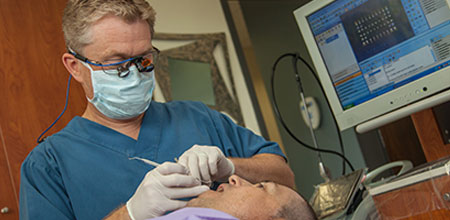
A crown procedure can be done in ONE visit without ever having to leave your chair. 
We first will take impressions or a mold of your tooth that will be used to create your custom crown.  While the tooth is numb your dentist will prepare the tooth by removing any decay and shaping the surface to properly fit the crown.


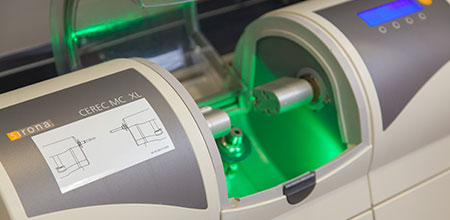
Using our state of the art CEREC machine in our on site laboratory your crown is shaped, cut and colored in a matter of minutes.  Once color and shape have been matched perfectly your dentist will clean the tooth and cement on your custom made crown.


You will be given care instructions and encouraged to have regular dental visits to check your new crown.


preventative-dental1.jpg


Composite fillings


A composite (tooth colored) filling is used to repair a tooth that is affected by decay, cracks, fractures, etc.   They decayed or affected portion of the tooth will be removed and then filled with a composite filling.  Because composite fillings are tooth colored, they can be closely matched to the color of existing teeth, and are more aesthetically pleasing.


Reasons for composite fillings

  • Chipped teeth
  • Closing space between two teeth
  • Cracked or broken teeth
  • Decayed teeth
  • Worn teeth


You will be given care instructions at the conclusion of your treatment.  Good oral hygiene practices, eating habits, and regular dental visits will aid in the life of your new fillings.  As with most dental restorations, composite fillings are not permanent and may someday have to be replaced.  They are very durable, and will last many years, giving you a long lasting, beautiful smile.


preventative-dental2.jpg


Root Canal Therapy


Root canal therapy is needed when the nerve of a tooth is affected by decay or infection.  The infection destroys the nerves located within the root of the tooth, eventually causing the tooth to die.  To save the tooth, the pulp (living tissue inside the tooth), nerves, bacteria and any decay are removed.


Your dentist will drill through the tooth’s crown and remove the pulp and nerves located within the root.  The area is cleaned and the root is filled with medicated dental materials to restore the tooth and keep the infection from returning.  All teeth that have root canal treatment should have a crown placed upon that tooth.  A crown will protect the tooth and prevent it from breaking, restoring it back to its full function.


Root canal treatment is highly successful and usually lasts a lifetime, although on occasion, a tooth will have to be retreated due to new infections.


Signs and symptoms for possible root canal therapy

  • An abscess (or pimple) on the gums
  • Sensitivity to hot and cold
  • Severe toothache pain
  • Swelling and/or tenderness

Reasons for root canal therapy

  • Decay has reached the tooth pulp (living tissue inside the tooth)
  • Infection or abscess have developed inside the tooth or at the root tip
  • Injury or trauma to the tooth
  • Previous extensive work performed on the tooth

You will be given care instructions your appointment.  Good oral hygiene practices and regular dental visits will aid in the life of your root canal treatment.


Fixed Bridges

A dental bridge is a fixed (non-removable) appliance which is an excellent way to replace missing teeth.


There are several types of bridges.  You and your dentist will discuss the best options for your particular case.  The “traditional bridge” is made of porcelain fused to metal.  Our office commonly uses newer ceramic materials to provide better cosmetics for our patients.  This type of bridge consists of two crowns that go over two anchoring teeth (abutment teeth) and are attached to pontics (artificial teeth), filling the gap created by one or more missing teeth.


Dental bridges are highly durable and will last many years, however they may need replacement or need to be re-cemented due to normal wear and tear.


Reasons for a fixed bridge

  • Fill space of missing teeth
  • Maintain facial shape
  • Prevent remaining teeth from drifting out of position
  • Restore chewing and speaking ability
  • Restore your smile
  • Upgrade from a removable partial denture to a permanent dental appliance

Getting a fixed bridge requires two visits. While the teeth are numb, the two anchoring (abutment teeth) are prepared by removing a portion of the enamel to allow for the crown.  Next, an impression or mold is made which will be sent to a dental laboratory where your bridge will be fabricated.  In addition, a temporary bridge will be made and worn for a few weeks until your next appointment.


At your second visit, the temporary bridge is removed.  Your permanent bridge is checked, adjusted and cemented in to achieve a proper fit.


You will receive care instructions at the conclusion of the procedure.  Proper brushing, flossing and regular dental visits will aid in the life of your new permanent bridge.


preventative-dental3.jpg


Bruxism / Grinding / Retainers

Bruxism is the term used to describe the grinding and clenching of the teeth, often during sleep.  It can be caused by several factors including stress, a reaction to pain, certain sleep disorders or teeth that are misaligned.


When you clench and/or grind your teeth some of the strongest muscles in your body tense up creating stress and tension to your jaw joints, neck muscles and teeth.  This can cause morning and tension headaches or even damage surrounding joints, teeth and other muscles.  In some cases grinding and clenching can cause dental problems including chipping, hot and cold sensitivity, damage to dental work and more serious scenarios.


We can create a custom made appliance that fits over your teeth at night within a few days to a few weeks, you will feel relief from the painful results of teeth clenching and grinding.